

Most say it takes 7 to 20 times for someone to see an ad before making a purchase.
That’s because those people suck at marketing.
Five common lies about marketing kill sales growth. Once you master the 5 associated truths, you’ll convince prospective customers to buy the first time they see your message.
I’ve used these five truths to grow two businesses to over $100 million in sales each. I’ve also used them to design a training program that helped others start businesses with an estimated $10 billion+ in sales.
Discovering the Real Secrets of Marketing
After just seven months, I quit my post-college investment banking job to start a business.
I had no idea what business to start.
I moved to Austin to help my dad grow his alternative medicine business while I figured out my next steps. After a month, I noticed that salespeople from various pharmaceutical-grade supplement companies would drop by each week to pitch my dad on offering their products in his clinics.
Once a doctor convinced a patient to buy one of those products, the patient would have to come back to the doctor’s clinic each time to repurchase it. That seemed super inefficient and annoying to the patients.
Selling high-quality health supplements online became my first business venture.
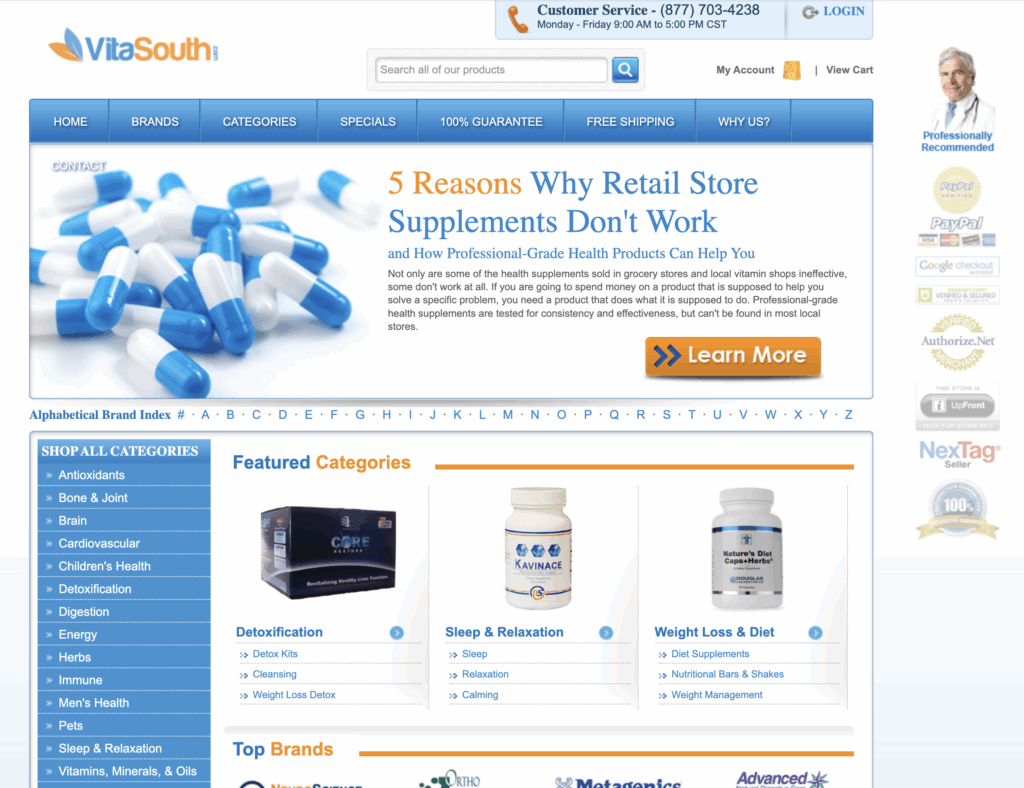
To learn how to get customers, I signed up for in-person advertising seminars offered by Google.
I grew sales from nothing to $2 million per year in two years.
Then I checked my American Express bill.
$100,000 due in less than 30 days.
My bank account had only a few thousand dollars in it.
I realized that the faster I grew sales, the more money I lost because all I knew how to do was spend money on Google. I didn’t know how to turn those sales into repeat sales — or profits.
I signed up for an internet marketing seminar taught by Ryan Deiss and Perry Belcher, leaders of Digital Marketer at the time.
At that event, I discovered a whole new way to drive sales that cost nothing extra to implement.
Using strategies from events like theirs, through experimentation, and through reading hundreds of related books and creating thousands of pieces of marketing materials, I discovered a proven way to turn strangers into customers.
It’s more profitable, more fun, more predictable than what most people teach in marketing.
If I had to present my message to every prospect seven to twenty times, none of my businesses would have scaled. I’d also be broke.
Instead, I’ve built businesses two businesses with over $100 million in sales and tens of millions of dollars in profit each.
What follows are the 5 most common lies — and real truths — about marketing.
#1: “Target a specific niche.”
“Riches in the niches,” they say.
Wrong.
People who sell in niches work in ditches. (I couldn’t help myself.)
Don’t go after some tiny scrap of a market that smart entrepreneurs and big companies were so nice to leave for you to exploit.
Go after the biggest market possible.
The best business in the world is one that can expand infinitely with one product.
If every time you succeed and dominate a niche market, you have to start over again and find a new one, you waste a portion of your life.
This philosophy is also found in investing. As a younger investor, Warren Buffett prided himself on going after “cigar butt” investments. He’d look for tiny, terrible companies that were so cheap, he knew he could make a little money out of them in the short term (“one last puff” of the soggy cigar lying on the ground). Later, after working with Charlie Munger, he realized it was much easier and more profitable to invest in great companies with long runways to expand. With one good decision, such as investing in Coca-Cola in 1988, he could do nothing for decades while the company grew and profited.
At our company Lifeboost Coffee, we deliberately entered a huge market: coffee. We needed a unique angle — low-acid coffee — to stand out in that market, but we wanted a business that could expand for decades without constantly inventing new products. Currently, we generate over $50 million per year in sales and see no reason why we can’t grow sales with the same core products to hundreds of millions of dollars in sales.
#2: “People’s attention span is short.”
When we used to do big launches for our e-commerce training program, I can’t tell you how many times our videographers would say to me, “Matt, I think these launch videos would work better if they were shorter.”
Despite producing $100 million in sales for that program with very long sales videos (around two hours combined), they still didn’t believe me.
One year, I let them try to create a short version of the sales video, condensed down to around 10 minutes.
It didn’t produce anything.
Believe me, if I could sell the same dollar amount of a product with less than 1/10th the effort, I would. But it doesn’t work that way.
Especially now, people often say everyone’s attention span is extremely short and if you require people to read or absorb a lot of content, you’ll lose them.
Wrong.
Currently, I’m focused on growing my YouTube channel and am studying the channels of popular business influencers. The top video of one of the creators, Simon Squibb, is 2.5 hours long (with 15M views). The top video of a branding expert, Caleb Ralston, is over six hours long (with 697K views).
Our primary sales page for Lifeboost contains 2,980 words.
Some of the most popular podcast shows today, such as Huberman Lab, The Joe Rogan Show, and Acquired, regularly feature episodes that are two to three hours long.
People will pay attention; just don’t be boring.
On a marketing page, include every possible relevant reason to buy. Just be specific and factual. Don’t say “our product is high-quality” 12 different ways; instead, provide 12 facts about your product that make it high-quality, such as specific information on how it’s made.
#3: “You need systems to scale.”
Traction/EOS, OKRs, Getting Things Done, RPM, Atomic Habits, the 12-Week Year, Kanban, time blocking, pomodoro technique, Eisenhower Matrix, the One Thing, SMART goals, BHAGs, inbox zero.
I’ve done it all.
You know what? You don’t need any of it.
If you keep things simple.
You need all that nonsense if you have too many projects, too many products, too many marketing channels, too many ads.
A decade ago, a friend of mine was doing $500,000 per month selling a two-ounce mole remover product. He bought it for $2 and sold it for $40. He sold it in one channel: Skymall magazines.
Now that is a good business.
Super profitable. Easy to run. Simple.
On a much larger scale is RedBull. They reached a billion dollars in annual sales with one product, an 8.4 fl oz can of RedBull. They sold it in retail stores (one distribution channel) and used guerrilla marketing tactics (such as free samples at colleges) to increase awareness.
A billion dollars. One product. One sales channel. One marketing method.
People who say you need systems either 1) have something to sell you (like your friendly Traction/EOS consultants) or 2) are so bogged down in nonsense that they put systems in place rather than making hard decisions.
Focus on what matters, eliminate everything else, and spend zero time building systems.
#4: “You’ve got to hustle.”
Smart scaling is painfully boring.
Be less like a boiler room phone salesperson dialing for dollars 14 hours a day and more like a scientist in a lab running an experiment and waiting for the small plant to grow into a large plant.
When scaling our e-commerce business from $200K to $2.5M in the first year I got involved, here’s what we had to do:
- Edit the main sales page to make it more effective
- Create a few ads to test
- Turn on the ads
- Wait for results
That’s it.
Waiting was 80% of our job.
Once results came in from the ads and funnels, we tweaked our assets. Then, I waited again.
If the results improved, we clicked on the budget inside Facebook ads to modify the campaign budget and typed a new, higher number.
That low-effort work is how we scaled from $200,000 to $50 million in six years.
Sure, we kept ourselves busy doing a lot of other things because “that’s what entrepreneurs do, right?” But most of that didn’t matter.
All that really mattered was putting a dollar into the advertising machine and getting more than a dollar out. Then, increasing budgets.
#5: “Your product is everything.”
Jeff Bezos said, “Advertising is the price you pay for having an unremarkable product.”
Well, Jeff, sorry, but you built a technology company, not a consumer brand.
Tell Coca-Cola, Monster Beverage, Red Bull, Procter & Gamble, Unilever, or even Apple not to advertise, and you’d kill those companies. (Had they not spent billions advertising, we would have never known they existed.)
With a technology company or a platform business (like Costco, Walmart, Amazon, or Uber), you must optimize the user experience while getting costs as low as possible. Any money you spend on advertising is diverted away from those two activities, hurting your competitive advantage.
With a consumer brand, you advertise to associate your product with what people desire. Without that association, your product and brand hold no value.
Without massive advertising, Procter & Gamble’s Downy paper towels wouldn’t sell billions per year. P&G spends billions advertising Downy as the solution to a shiny, clean, happy kitchen. That’s why millions of people choose Downy paper towels instead of equivalent, cheaper, generic knock-off brands at the grocery store.
Product is not everything.
What really matters is profitable reach.
The best product does not win; the product that reaches the most people wins.
The way that happens is to get advertising to pay for itself.
P&G does that on a massive scale by testing small and then rolling out national advertising. They continually reinvest a portion of profits into advertising — like Coca-Cola has done for 100 years — so the product remains top-of-mind for consumers.
We’ve reached millions of people with our coffee company by creating a sales funnel that enables us to make enough money per sale to cover the cost of our advertising.
That’s what matters.
You’ll improve your product over time. But nobody will ever know it exists if you don’t figure out a way to acquire attention at scale profitably.
(Amazon, by the way, spends over $20 billion per year on advertising and is the largest advertiser in the world.)
Conclusion
To wrap up, here are the five most common marketing lies and their alternative truths:
- “Target a specific niche.” → Pick the biggest market possible.
- “People’s attention span is short.” → Give all the reasons to buy — the longer the better.
- “You need systems to scale.” → You need simplicity to scale.
- “You’ve got to hustle to succeed.” → Don’t sweat, experiment.
- “Product is everything.” → Profitable reach is everything.
David Ogilvy, who built an $864 million marketing agency under his name, said, “Don’t bunt. Aim out of the ballpark. Aim for the company of immortals.”
Ignore the five lies and use the 5 truths to build the biggest, most impactful business possible.
What’s Working to Scale My $100 Million Per Year Businesses?
I currently own three businesses that produce around $100 million per year in sales.
Join over 80,000+ subscribers to get my free bi-weekly newsletter, the Scaling Journal, to discover what’s working so you can apply it to achieve more with far less effort and time.
Subscribe below for free now.