

What’s the highest mountain in the world?
Mount Everest.
What’s the second-highest?
My guess is you don’t know (neither did I until I looked it up for this newsletter).
Who was the first president of the United States?
George Washington.
Who was the second?
In the marketing classic, Positioning, published 25 years ago by Al Ries and Jack Trout, the authors said:
“The easy way to get into a person’s mind is to be first.”
The first company to dominate a market is hard to beat—Coca-Cola in cola, Kleenex in tissue, and Facebook in social media.
Hidden Monopolies
Ten years ago, Dave Asprey wrote a post titled “The Science Behind Just One Mold Toxin in your Coffee”. He cited a study that found more than 90% of the coffees they tested were contaminated with mold. That convinced me only to drink healthier, cleaner coffee.
In 2018, I discovered that a friend, Charles Livingston, owned a side business selling high-quality, clean coffee. The company was small, but customers kept rebuying.
We partnered up in January of 2019. I took over customer acquisition. In our first year, we grew the business 10X.
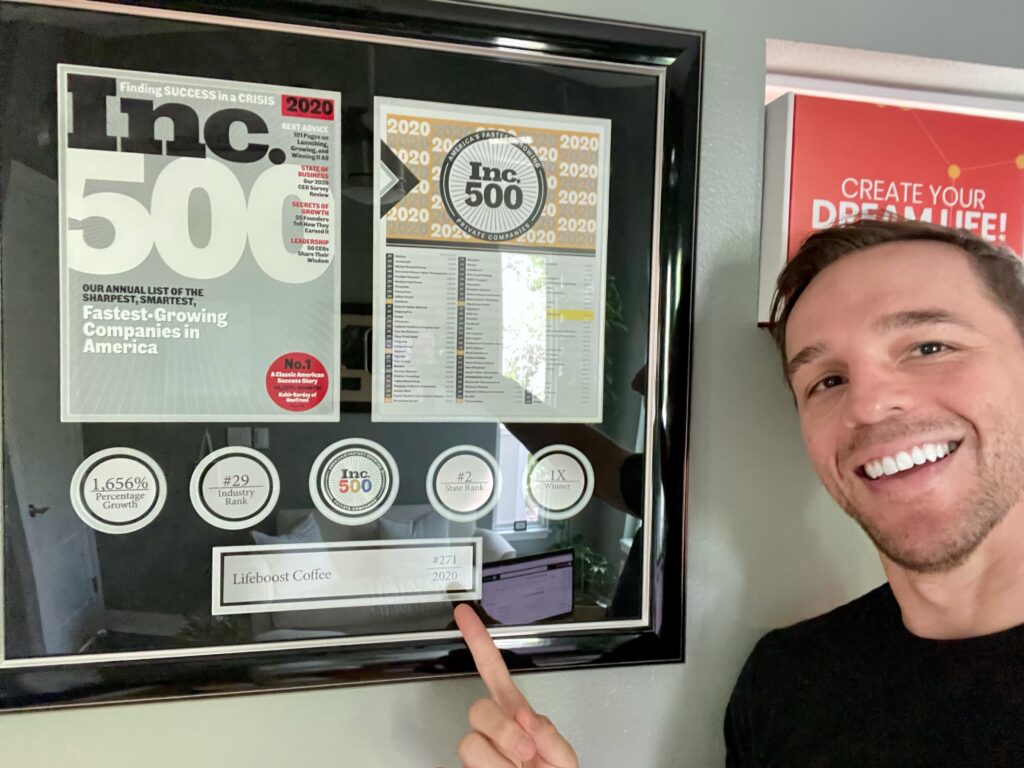
By reading lots of customer reviews (ours and our competitors’), we discovered a “hidden monopoly” in the $500 billion coffee market: low-acid coffee.
A Hidden Monopoly is an underserved but growing segment you can own within a larger market.
Over a billion people drink coffee daily. Yet, for many of them, coffee irritates their stomachs. Some stop drinking coffee, others deal with the discomfort. By focusing our product and messaging on a more stomach-friendly coffee, we offered a new option to many people with no other choice. We found our Hidden Monopoly.
We could be the first to own that position.
How to find your Hidden Monopoly
Here’s a simple process you can use to find Hidden Monopolies in consumer products.
1. Pick a big, growing market
- Open the Amazon bestsellers page.
- Choose 3-5 categories you’re most interested in (or that apply to the products you already sell).
- Look through the top 100 products in those categories.
- Create a list of 10-20 potential top-selling products.
2. Study the market to uncover underserved demand
- Read 20-30 reviews for the products you find.
- Identify who is buying (gender, age, use case, etc.).
- Find out what they like and don’t like about the current products.
- Look for gaps between what people want and what’s currently available.
3. Create a uniquely positioned version of that product
In the fantastic copywriting book, The 16-Word Sales Letter, author Evaldo Albuquerque says you must first ask: “How is this different from everything else I’ve seen?”
Your goal is to offer a product that’s unique enough—even if only in how it’s positioned and marketed—that people instantly see it as new and different than everything else they’ve looked at.
In some markets, you don’t have to get too creative.
In 2011, four childhood friends developed the idea of using flushable baby wipes for grown men. Today, Dude Wipes’s annual sales exceed $200 million.
4. Test small and get real feedback
Lastly, test small. Order the fewest units at the lowest possible cost to produce a high-quality product.
Even at our scale ($50M+ per year), we test small. A product might not sell; we might need to change the packaging or tweak the product itself.
Order enough inventory to get the product into real consumers’ hands to get feedback.
Capture positive reviews in text, photos, and videos. Tweak the product and packaging if necessary. Then, ramp up inventory and sales to dominate your own Hidden Monopoly.
Recap: The 4 steps to create your Hidden Monopoly
- Pick a big, growing market.
- Look for an underserved segment within that market.
- Create a uniquely positioned version of the product tailored to that segment.
- Test small and adjust as needed.
What’s the best way to scale an e-commerce business today?
Each week, I share exactly what’s working to grow my $100M businesses for free. Join 80,000+ founders scaling companies by subscribing to my free newsletter, the Scaling Journal, below.
Till next time,
Matt