

This article will save you years of your life.
The average person spends 4 hours and 37 minutes per day staring at a smartphone.
If a kid gets a phone at 10 years old and lives to 80, that’s around 120,000 hours staring at a phone.
Or nearly 14 years.
Below are 7 changes you can make to your phone to reduce your usage from 5 hours per day to 1 hour per day.
That’s 11 years of life back.
In 11 years, you can become a doctor, become a multi-millionaire, learn more than one language, or master nearly any skill.
Note: All the following advice is provided from my perspective as an iPhone user. If you use an Android device, you’ll need to adapt some of the instructions. I’m sure all of this is possible regardless of your smartphone device.
#1. Uninstall all non-essential apps
A phone is a device by which sound (such as speech) is converted into electrical impulses and transmitted (as by wire or radio waves) to one or more specific receivers.
To get years of your life back, use your phone for its original purpose: transmitting speech.
Uninstall as many apps as possible that don’t serve that purpose, such as:
- Social media apps (Facebook, Instagram, TikTok, X, YouTube, etc.)
- Entertainment apps (games, Netflix, and other media apps)
- To-do list and other “productivity” apps (see #6)
- AI apps (ChatGPT, Gemini, Grok, Claude)
Zero apps are essential to a happy and successful life. Humans, including those far more successful and productive than either of us, thrived for centuries without smartphones (or the internet).
However, the following apps are unlikely to be too distracting and likely offer greater benefits than drawbacks:
- Map apps (Apple Maps, Google Maps)
- Uber and other transportation apps
- Audible and other learning apps
Uninstall all non-essential apps. You can always add a few back, if you must.
#2. Remove all apps from your homescreen
What’s the worst thing you can do when trying to lose weight? Put a jar of cookies on the counter.
Enticing apps on your homescreen are like jars of cookies for your brain.
With apps littering your homescreen, every time you open your phone for something mundane like making a phone call or getting directions, you’re tempted by dozens of distractions.
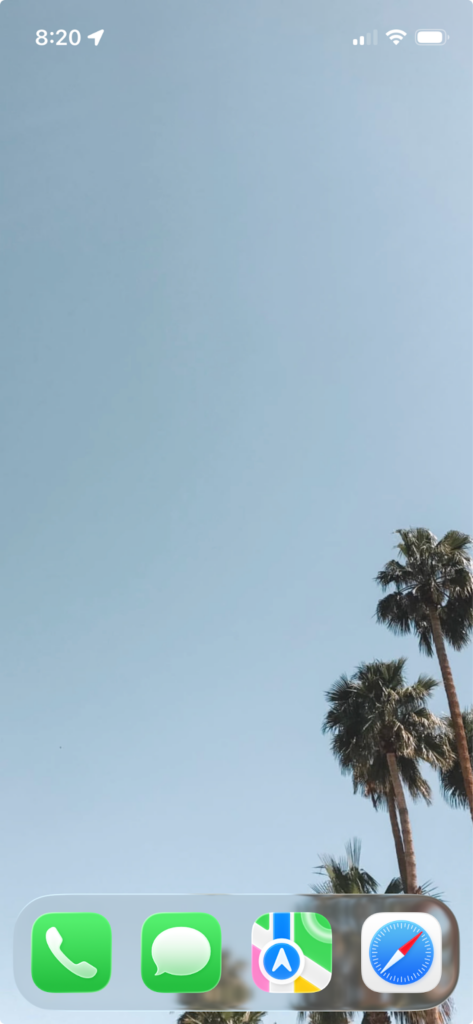
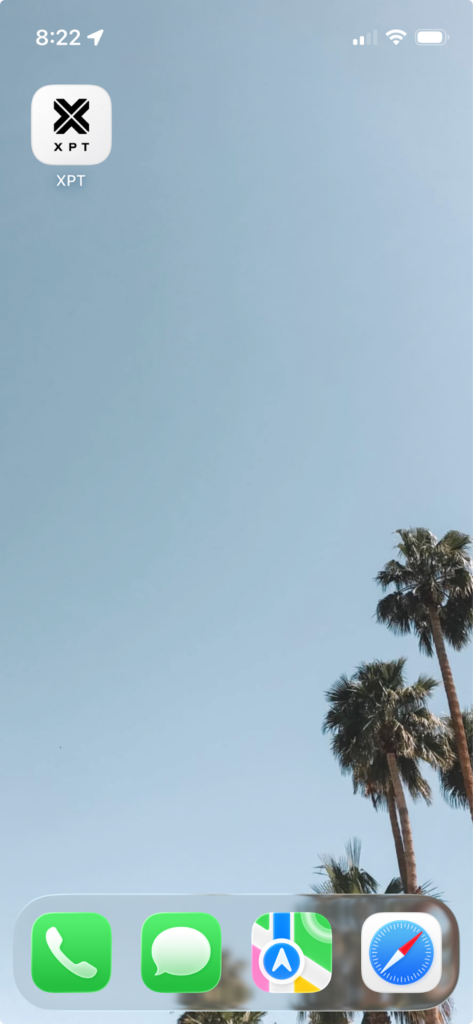
You may decide to add 1 or 2 apps that support your goals to your homescreen. I, for example, am following a new workout program called XPT and have the app on my homescreen. Once I build the habit of following that workout without needing the reminder, I’ll remove it too.
#3. Add the Screen Time widget to the homescreen
When I was doing a lot of jiu-jitsu and heavy lifting, I had a hard time gaining weight (I know, I know, no pity over here).
The only thing that worked was putting a scale in my office and weighing myself daily.
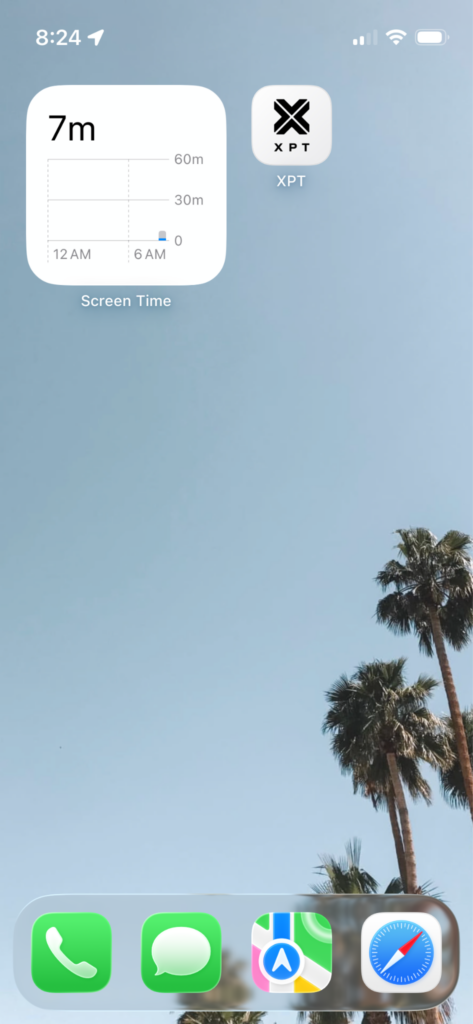
If you use an iPhone, add a Screen Time widget to your home screen so you can see exactly how much you’re using your phone.
Simply tracking what you want to improve causes desirable change.
#4. Write down what you want to Google
My most used app is the Safari browser.
I’ll read articles or Google things I’m curious about.
Though you could say I’m “learning”, ceaseless Googling turns your brain to mush.
Some call it “popcorn brain”. By looking up every curiosity that pops into your mind, your brain becomes overstimulated, your attention span weakens, and you even weaken your long-term memory formation.
Rather than immediately Googling anything that comes to mind, write down what you’d like to look up (in a notebook or on a sheet of paper). Then, look those things up (if you still care) the next time you’re at your computer.
You’ll feel calmer and will be less distracted.
#5. Stop listening to podcasts
I’d bet heavily that zero billionaires, living or dead, attribute their success to listening to podcasts.
Yet, I know people with little ambition, little drive, and little self-discipline who are avid listeners of popular podcasts.
Podcast listening is a lazy form of learning because it’s completely passive, not unlike watching TV.
Further, even for the best podcasts, the synthesis and preparation for a three-hour podcast episode pales in comparison to what you’d get in a book, which might only take you an extra hour to read.
A podcast host may spend a few hours preparing for a podcast episode; the guest likely spends zero time preparing.
Authors of books spend months or years writing and editing before publishing.
Skip podcasts.
Read physical books.
If you really want the information available in a podcast episode, print the transcript. For some ecommerce podcasts, I copy the YouTube transcript and print it out. I get through a 1.5-hour podcast in about 20 minutes, skipping all the fluff.
#6. No digital to-do list
Using a digital to-do list is like an addicted gambler making his daily coffee shop one inside a casino.
The purpose of a to-do list is to reprioritize your next actions. If every time before working on the next most important thing on your list, you must wade through your smartphone’s distractions, you’re doomed.
The distractions are too strong.
Keep your to-do list analog (I put mine on a new sheet of paper in my notebook each day).
#7. Call people
The best available communication tool when an in-person meeting isn’t feasible is a phone call.
Zoom can be useful for synchronously reviewing materials (documents, website designs, etc.), but it has two significant downsides:
- You’re required to sit or stand in front of a computer, unlike a voice-only phone call, in which you can walk while you talk
- You’re likely to experience the cognitively draining “Zoom fatigue”. Due to the unnatural, long periods of close-up eye contact, self-view monitoring, and the inability to monitor nonverbal cues, endless Zoom calls are nobody’s idea of a good time.
Texting is useful for quick updates such as “I’ll be home in 20”. It’s mentally taxing when used as a synchronous communication tool that requires back-and-forth messaging.
Call the other person instead.
A better life
This past Sunday, I traveled back from a group ski trip. My shuttle arrived in Vancouver at 10:30 AM. My flight was delayed until 3:30 PM.
I texted and messaged on Slack with my business partner and a team member. I checked WhatsApp. I Googled who knows what.
I felt mentally fried.
The second I turned off my phone and put it in my backpack, I immediately felt lighter and calmer.
Your smartphone is not your life.
Reclaim years of your one, important, precious, amazing life.
Imagine what you could do with an extra 12 years or 28 hours per week.
—Matt