

Our financial situation felt bloated and murky. Multiple businesses, brokerage accounts, various sources of income, and more expenses than I’d like to admit.
I’d read the book The One-Page Financial Plan by Carl Richards multiple times. I can’t remember if I ever actually created such a plan, but now I was ready. I even bought a $500 course by a partner of his (not recommended unless you own a financial planning company).
Why is money important to you?
Even though I’ve done well financially, I kept feeling unsettled about money.
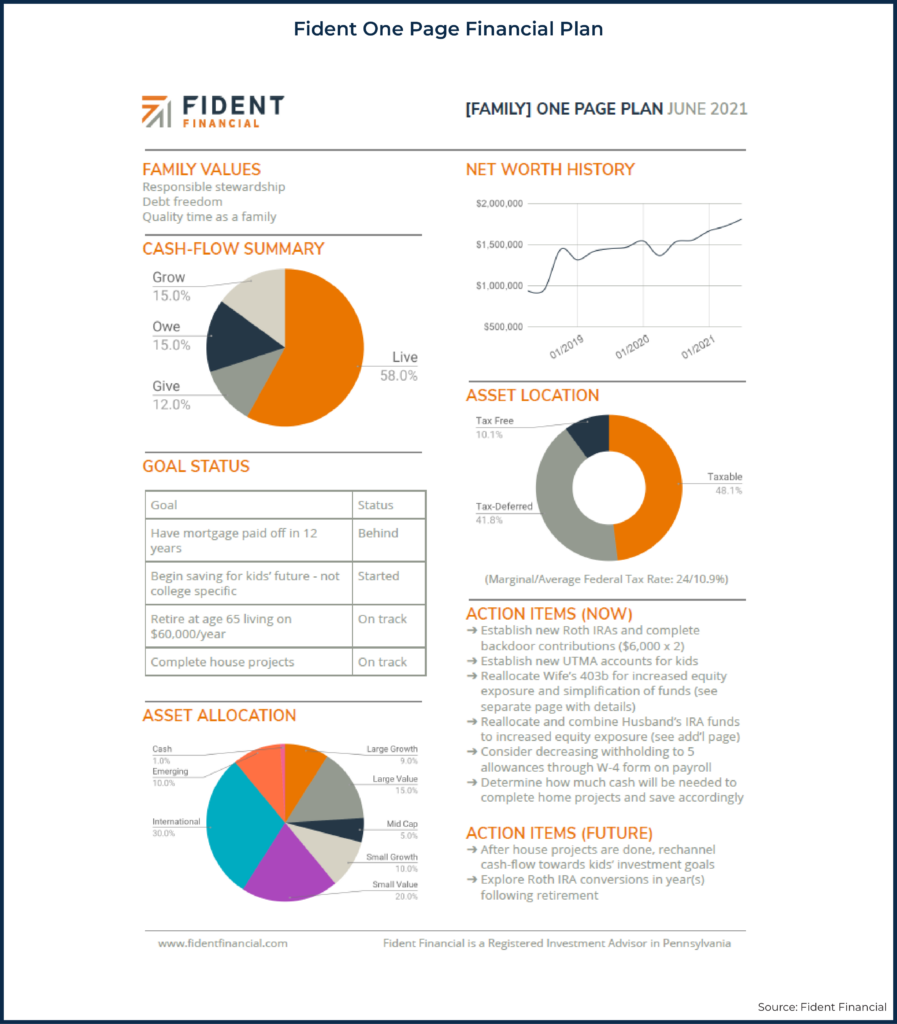
When working with a client, Richards asks this question first: “Why is money important to you?”
Such a simple question; so many possible different answers based on your history, beliefs, and goals.
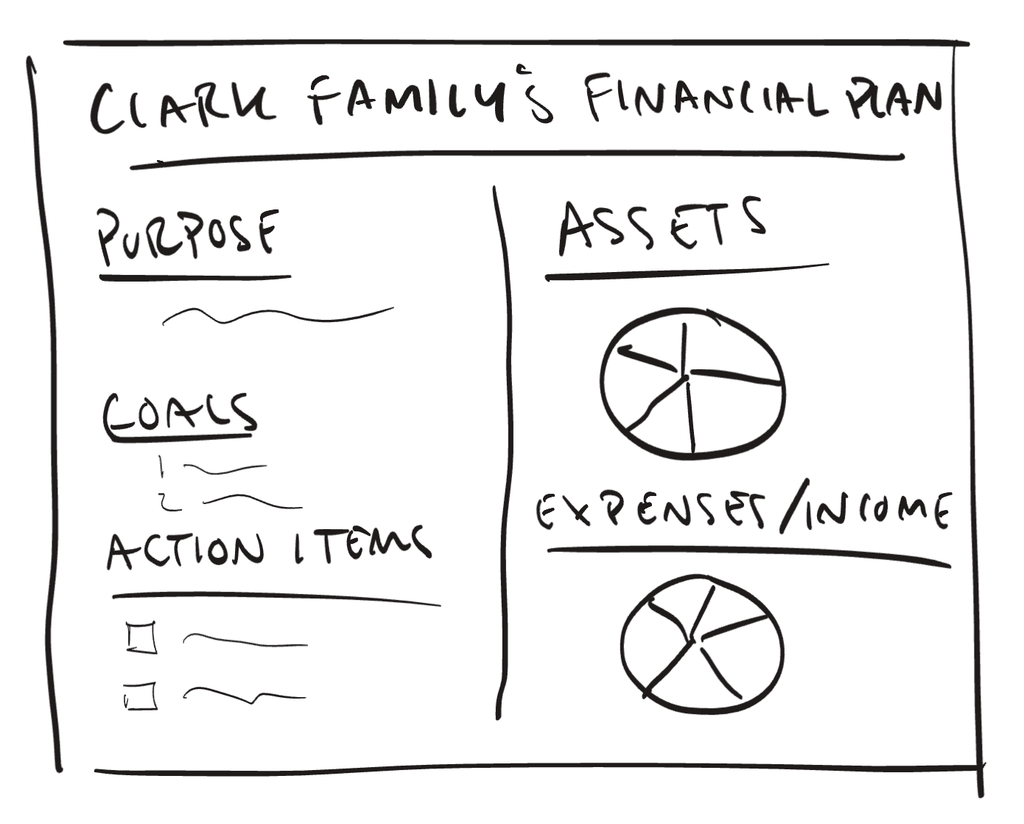
I came up with an answer, then, without revealing it, asked my wife the same question. We both had remarkably similar answers. Here’s our edited version for our one-page financial plan:
To do what we want, and to help others.
We want to have the money and freedom to not do work we don’t want to do, to enjoy the activities we like, to live where we want, and to not have to worry about money.
We also want to help others, in small ways and big. That means helping friends or family members in need, supporting charities we believe in, or giving in whatever ways move us in the future.
What would need to happen to fulfill your purpose?
The next step in creating a one-page financial plan is to clarify a few goals related to your purpose. After asking why money is important, Richards says to clients, “What would need to happen in order for you to achieve the purpose you just stated?”
A client he mentioned in the video says he wants to “not be a burden to the kids”. Richards says, “Great. What would need to happen in order for you not to be a burden to the kids?”
Your answers to that question become your goals.
After a couple of days of discussion with my wife, usually while walking with our dog and one-month old around our neighborhood, here’s what we came up with:
- Zero debt
- Save 20%
- Give 10%
Others might disagree with these. That’s OK. For us, they allow us to fulfill the purpose we see for money.
With zero debt and saving/investing 20% of after-tax income, we aren’t pressured to do anything we don’t want to do just to make money.
By setting aside 10% of after-tax income in a separate savings account, we make it easy to help others.
Action items
Next, what do you need to do to achieve your goals?
For us, we needed to set up a new savings account to set aside 10% of after-tax income. We also paid off her Tesla lease. I’d always just paid cash for cars, but we leased this one because I thought I could better invest the money elsewhere, and we wouldn’t risk her car depreciating significantly, a risk with any tech-heavy car like a Tesla. We just bought out the lease. No more $2,500 per month payment.
Assets, income, and expenses
Lastly, similar to the example above, I listed our current asset allocation between public company stocks and other liquid assets, private businesses, and home equity. I also included a final section on our current monthly expenses as a percentage of after-tax income. These serve as a snapshot of where we’re at right now to compare to where we’ll be in the future when we update the plan.
The real purpose of creating a one-page financial plan
The purpose is in the planning itself. It forced my wife and me to have good, meaningful conversations about money and what it means to us. I feel more aligned with her now that we’ve been through this process.
Also, by clarifying why money is important to us and a few specific, related goals, it’s now easier and faster to make financial decisions. If we want a new house, for example, then we don’t play games with mortgages or interest rates; we wait until we’re willing to fork over the cash required to pay for the whole house upfront.
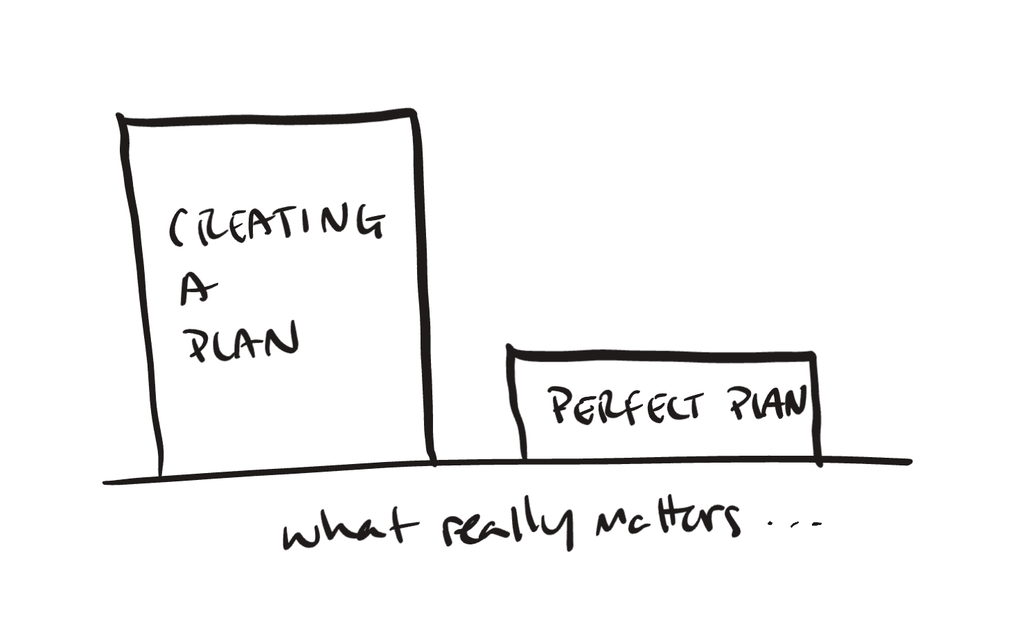
Richards made a good point in one of the videos I watched about this process. He said that people get so caught up in creating the perfect plan when just about any plan is better than no plan.
Our plan might not be perfect, and I’m sure it will change in the future. But for now, it’s brought me the peace of mind and clarity around our finances I needed.
I highly recommend you spend a few hours or a few days answering the question, “Why is money important to you?”, and creating a simple financial plan to support that purpose in this important area of your life.
—Matt